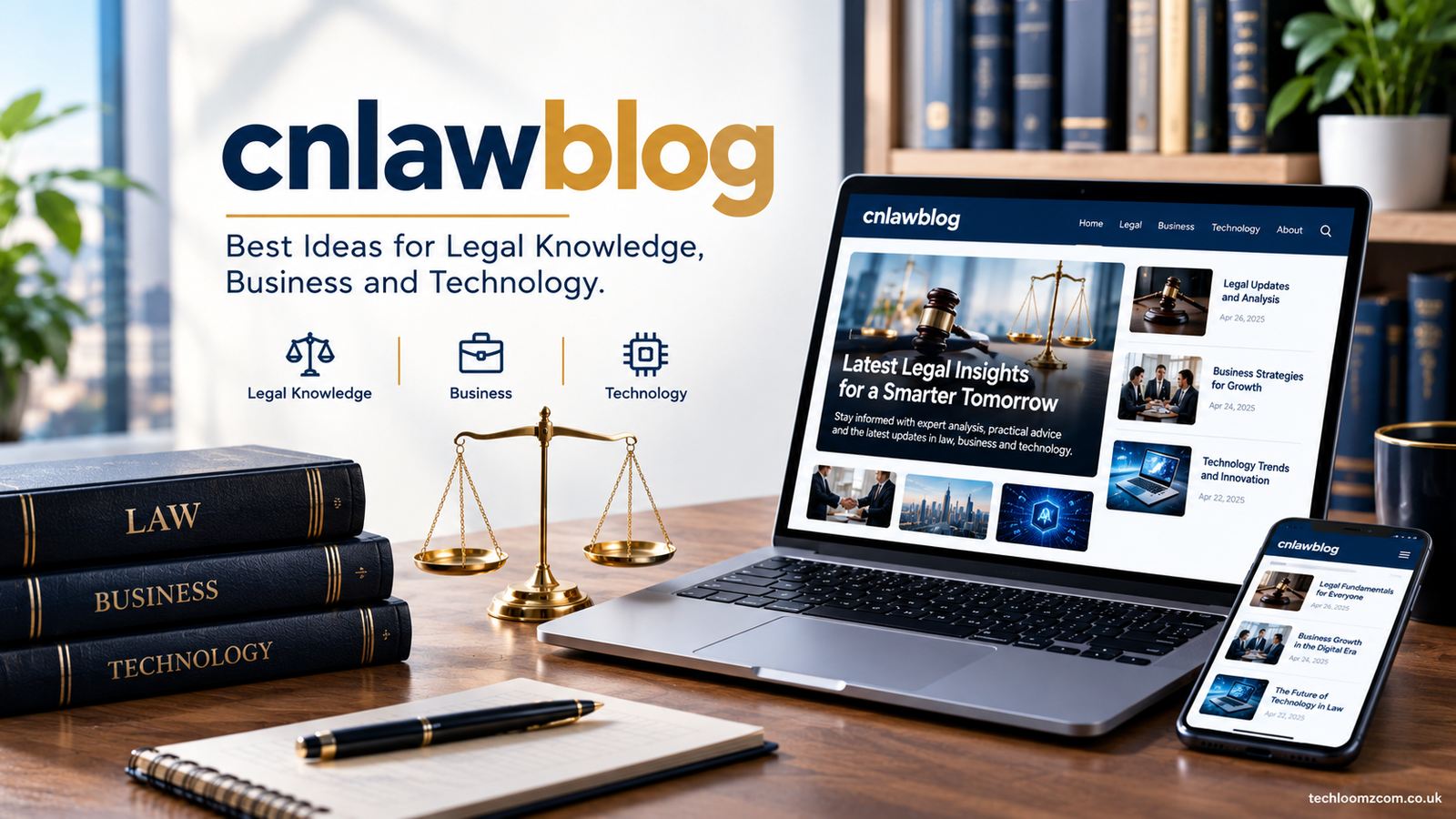
CNLawBlog is an online publication that readers may discover when searching for legal information, business guidance, financial knowledge, technology updates, and other useful subjects. The website, CNLawBlog.com, presents itself as an independent digital platform designed to make information easier to understand. Although its name suggests a primary focus on law, its stated coverage extends to several areas of everyday life, including education, health, real estate, home improvement, lifestyle, and gaming.
As more people turn to the internet to understand complicated topics, websites such as CNLawBlog can provide an accessible starting point for learning. Readers may want to understand a legal concept, explore business responsibilities, learn about technology, or find introductory information before making a decision. Understanding the website’s purpose, content categories, editorial approach, and limitations helps readers decide how to use its material effectively. This guide explores CNLawBlog in detail and explains why accuracy, transparency, and reliable information matter when reading online publications.
What Is CNLawBlog and Why Does It Matter?
CNLawBlog.com describes itself as an independent digital publication that aims to provide accessible information to a broad audience. According to its published About page, the website was established in August 2018 and developed from a legal-focused publication into a platform covering a wider range of subjects. Its stated approach emphasizes understandable explanations, organized content, and information intended to help readers explore unfamiliar topics.
The website’s broad focus reflects the way people use online resources today. Someone researching a legal question may also need background information about business practices, financial responsibilities, or technology. A publication that covers several subjects can introduce readers to related ideas without requiring them to begin every search from scratch. However, the usefulness of a multi-topic website depends on the quality and relevance of its individual articles.
CNLawBlog is best understood as an informational resource rather than an official government website, law firm, or universal source of professional advice. Its content may help readers understand general concepts, but important claims should be verified before they are used to make legal, financial, or personal decisions. Recognizing this distinction allows readers to benefit from accessible information while maintaining realistic expectations.
Main Topics and Categories Available on CNLawBlog
CNLawBlog describes its coverage as extending across law, business, finance, technology, education, health, home improvement, real estate, lifestyle, gaming, and consumer information. This variety allows readers with different interests to explore the website. Instead of limiting its audience to legal professionals, the publication aims to provide information that may also interest students, entrepreneurs, homeowners, and everyday internet users.
Legal topics remain central to the site’s identity. Readers interested in general legal education may want to understand civil law, criminal law, family law, corporate law, accident claims, or personal injury matters. Business-related material may introduce contracts, commercial responsibilities, entrepreneurship, and organizational practices. Financial content can help explain common financial concepts, while technology articles may cover digital services, cybersecurity, and changing online practices.
The wider categories provide additional opportunities for learning. Real estate information may introduce property-related concepts, education articles can support general knowledge, and home improvement content may address practical household questions. Nevertheless, each category requires its own standards of accuracy. Readers should assess whether an article provides suitable evidence and expertise for its particular subject instead of assuming that all topics receive identical specialist treatment.
How CNLawBlog Helps Readers Understand Complex Subjects
One of the most useful purposes of informational writing is to make unfamiliar subjects easier to understand. Legal documents, financial explanations, and technology guides often contain specialized vocabulary that can confuse beginners. CNLawBlog’s stated editorial approach emphasizes clear language and organized explanations, which can help readers develop an initial understanding before exploring more detailed sources.
For example, someone learning about business law may first need to understand what a contract is, why agreements matter, and how legal responsibilities can arise. A reader exploring cybersecurity may need an introduction to data protection, online privacy, or common digital risks. Clear explanations can provide the background needed to understand more advanced information and identify questions that deserve further attention.
However, accessible writing should not remove important qualifications or exceptions. Legal rules differ between countries and regions, financial guidance depends on individual circumstances, and technology changes rapidly. Reliable informational content should explain these limitations and distinguish general educational material from advice tailored to a specific situation. Readers gain more value when an article is both easy to understand and careful about the details.
Who Can Benefit From Reading CNLawBlog?
CNLawBlog may be useful for students, professionals, small-business owners, homeowners, and general readers who want to learn about subjects outside their existing knowledge. Students can use introductory articles to develop background understanding, while professionals may explore unfamiliar business or technology topics. Entrepreneurs can also use general information to identify issues they need to investigate before making business decisions.
Everyday readers may find value in learning about consumer matters, real estate concepts, digital safety, and other practical subjects. For example, someone considering a property transaction may benefit from understanding basic terminology before speaking with a qualified adviser. A business owner researching contractual responsibilities may use introductory material to prepare more focused questions for a legal professional.
The publication should not be viewed as a replacement for professional guidance when the circumstances are complicated or consequential. A legal dispute, major investment, medical concern, or important contractual decision may require advice based on current rules and personal circumstances. In these situations, online articles are most useful when they help readers prepare for a conversation with an appropriately qualified professional.
Is CNLawBlog a Reliable Source of Information?
CNLawBlog publishes an editorial policy describing its intended approach to research, factual accuracy, editorial review, corrections, and content updates. Such a policy helps readers understand the standards the publication says it aims to follow. Its emphasis on clear writing and responsible information is relevant to anyone evaluating an online source.
However, an editorial policy is not independent proof that every article is accurate. Readers should examine the quality of the evidence, the author’s relevant qualifications where available, the publication date, and whether important claims are supported by credible references. Articles about legal matters should be checked against current legislation, official government guidance, and relevant court decisions. Financial information may require confirmation from recognized regulators or official financial institutions.
Trustworthiness also involves recognizing uncertainty. An article that explains the limits of its information may be more useful than one that promises a guaranteed result without sufficient evidence. Readers should distinguish established facts from opinions, predictions, and general recommendations. This careful approach helps them judge whether a particular article is suitable for learning or whether further professional advice is needed.
CNLawBlog and China Law Blog: An Important Difference
The names CNLawBlog and China Law Blog may appear similar, but they refer to different publications and should not automatically be treated as interchangeable. CNLawBlog.com describes itself as a broad digital information platform. China Law Blog, by contrast, is associated with the international law firm Harris Sliwoski and focuses on legal and business issues involving China.
This distinction matters when readers need specialized information. Someone researching Chinese business regulations, cross-border agreements, intellectual property protection, or manufacturing arrangements may be looking for a publication dedicated to China-related legal and commercial matters. A reader seeking general information about law, finance, technology, education, and lifestyle may have a different purpose.
Checking the complete website address and publisher information is the simplest way to avoid confusion. Similar names do not establish common ownership, shared authorship, or equal professional expertise. Readers should confirm that an article comes from the intended source and that its information applies to the relevant country or legal jurisdiction before relying on it.
How to Use CNLawBlog for Everyday Research
Readers can begin by visiting CNLawBlog.com and exploring the subjects available on the website. Selecting material that directly addresses a question can make research more productive. The article’s headline, introduction, publication date, author details, and supporting references can help readers determine whether the material is relevant to their needs.
The next step is to check whether the information remains current. Legal regulations, financial rules, health recommendations, and cybersecurity practices can change, making older explanations incomplete or outdated. Readers should also pay attention to geographical context. A legal rule applicable in one country may not apply in another, and even different states or provinces may have distinct requirements.
Finally, important claims should be verified before they influence real-world decisions. An introductory article may be sufficient for learning a basic definition, but a contractual obligation, legal deadline, or significant financial decision deserves closer examination. Consulting official documents and qualified professionals where necessary helps readers develop a more complete understanding and reduces the risk of relying on incomplete information.
CNLawBlog’s Role in Digital Publishing and Content Quality
Online publications help connect readers with information about subjects they may not encounter in their daily lives. Websites such as CNLawBlog can make this process easier through organized categories, descriptive headings, clear explanations, and articles designed around readers’ questions. A well-structured website also allows visitors to explore related subjects and develop a broader understanding of an issue.
Content quality is particularly important for websites that publish across several fields. A useful legal article needs appropriate legal context, while technology content requires attention to changing products, standards, and security risks. Business and financial articles should explain their assumptions and avoid presenting uncertain outcomes as guaranteed results. These differences make responsible editorial practices essential for maintaining reader confidence.
The principles of experience, expertise, authoritativeness, and trustworthiness, commonly known as E-E-A-T in Google’s quality guidance, offer a useful framework for evaluating content. They are not a guarantee of search rankings or a certification of a publication. Instead, they encourage attention to genuine expertise, reliable evidence, transparency, and useful information. For readers, these qualities matter more than promotional language or a website’s visibility in search results.
Conclusion
CNLawBlog.com presents itself as an independent online publication offering information about law, business, finance, technology, education, health, real estate, lifestyle, and other practical subjects. Its stated aim is to make information accessible through organized articles and straightforward explanations. This broad coverage may help readers develop an initial understanding of unfamiliar topics and identify areas that require more detailed research.
The value of CNLawBlog ultimately depends on the accuracy, relevance, and quality of the individual material being read. Checking publication dates, author information, supporting evidence, and applicable jurisdictions can help readers assess whether an article is appropriate for their needs. For legal, financial, medical, or other consequential matters, independent verification and qualified professional guidance remain important.
Overall, CNLawBlog is best approached as a potential starting point for general learning rather than an unquestionable authority on every subject it covers. By reading carefully, checking important facts, and recognizing the limits of online information, readers can make better use of digital publications and develop a more informed understanding of the topics that affect their lives.